
Here, we present the facilities and areas that will serve as venues.
Venue Map


Viewing
Passport
Purchase
/Exchange

Night Pass
Purchase

Parking

Apply to
Parking
Pass

Restaurant

Shop

Restroom

Universal
Restroom

Nursing
Room

Diaper
Changing
Station

Coin
Lockers

Information

Viewing
Spots
Venue introduction
Rokko Cable(Rokko Cable Shita Sta.・Sanjyo Sta.)
free admission
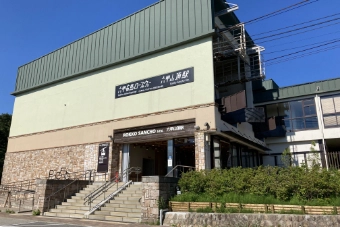
Tenran Observatory
admission fee required
Art Work
- B1
INOUE Ryo
Gaaaze! Fooocus! Fairy Watching
- B2
Jun Nguyen-Hatsushiba
A Conversation Between Two Mountains — At the Funeral — Mt. Rokko and Mt. Bà Vì speaking —
- B3
MIYAZAKI Hiroshi
CELEBRATION / Shakkei Vanitas

Hyogo Prefectural Mt.Rokko Visitor Center
(Memorial Monument)
free admission
Art Work
- C1
CHU Chih-Kang
Dialogue
- C2
Ryuichi Ono
RADIO ROKKO Dialogue Between Mountain and Sea
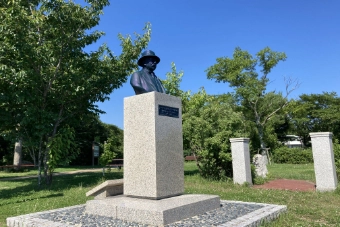
Banno Sanso
admission fee required
Art Work
- D1
KOMAKI Kazufusa
The Way / skywalker No.31
- D2-1
SUZUKI Yasuhito
Vestige
- D2-2
SUZUKI Yasuhito
Vestige

Museum Area
Rokko Musical Box Museum &
Gardens MORINONE, Shinike Pond
admission fee required
Art Work
- E1
Shohei Takasaki
Untitled (August 24 2026 / A circle)
- E2
HASHIMOTO Tamao
Jungle Gym
- E3
MIYASHITA Yuri
Roots
- E4
YAMAMOTO Shuji
Visitor Center in Mt.Rokko
- E5
Daisy Balloon
Between
- E6
MIYANAGA Koutarou
Syncretic Form: Rokko
- E7
FUNAI Misa
Peeking into the forest, The mountain hole.
- E8
Yayoi Kusama
Pumpkin
- E9
MOJAHID Musa
Assemblages of an Uncertain Tomorrow
- E10
SATO Risa
Kohachi
- E11
SAWA Hiraki
shadow step
- E12
NISHIDA Hidemi
fragile distance A-Aʼ, B-Bʼ,C-Cʼ (point A point B)
- E13
UEDA Mayu
Daikon
- E14
TAKAHASHI Ruri
Spend time between two people’s secrets
- E15
NARA Yoshitomo
Peace Head
- E16
HIRASAWA Kenji
The Stirrings of a New Planet Stirrings (Ayaka and Yui) Stirrings (Tekkan)
- E17
TAKAHASHI Kyota
Illuminated FruitsーHikarino-miー in SIKI Garden
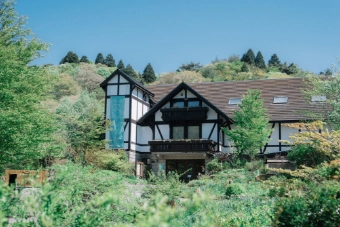
Museum Area
Rokko Alpine Botanical Garden
admission fee required
Art Work
- E18
ABE Ayaka
The Mountain Looks Back Through a Boar's Crystalline Lens
- E19
NORIMATSU Karin
FLORA OF MIAKNVA
- E20
TAGUCHI Kazue
Rokko Prism
- E21
SAITO Nanami
Disco
- E22
YOSHIMURA Tamaki
green couch
- E23
GR19[galaxy route nineteen]
Human Fungification Project
- E24-1
Russell Maurice
Witch Ring
- E24-2
Russell Maurice
Witch Ring
- E25
HÖSLAB / Kagoshima University Hosokai Lab
- HOU -
- E26
Anais Karenin
What was told us keeps mending pathways
- E27
MATSUI Shota
Stone of "Saidan"
- E28
hohobun
Light Installation: In full bloom: Forest of Lights
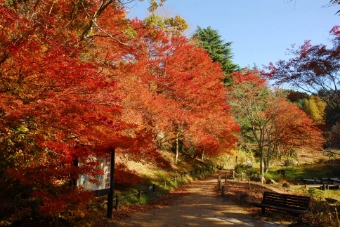
Mr.KAIHATSU’s cabin
admission fee required

Rokko Garden Terrace Area
free admission
Art Work
- D2-3
SUZUKI Yasuhito
Vestige
- G1
SAGAWA Takahiro
Instant Powerspot
- G2
TAKEMOTO Shinya
will
- G3
SHIKATA Kenichi
Excavated Scenery
- G4
KAIHATSU Yoshiaki
Future Post Office in Rokko
- G5
WANIBUCHI Miki
Walking Scapes - Resolution -
- G6
reiko tsubota
Delaying the sunset
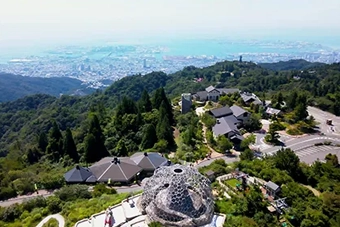
Rokko-Shidare Observatory
admission fee required
Art Work
- H1
KIMURA Takahito
Wind and Migratory Birds
- H2
IWATANI Yukiko
Plants Living in Rokko
- H3
DAITO Masaya
Whereabouts of the soul

Chapel of the Wind Area
admission fee required
Art Work
- I1
KAJI Seiya
Yamainu/Boar
- I2
SHOGEN Ryoji
Ubermensch
- I3
TANADA Koji
Crossing the Bridge Beyond Reach
- I4-1
ITO Taikan
Angel Dust ~Give me a kiss so hot it melts you to the bone~
- I4-2
ITO Taikan
John with a long ass and Yoko with a short ass
- I5
NODA Mitsuru
Monster Tree
- I6
SATO Keiichi
The space in the grandfather's nostril
- I7
SUZUKI Kika
Liminal Body: Dung / Bone / Milk
- I8
KOZAKI Masatake
Beastly Folk Tales Above Rokko
- I9
UCHIDA Nozomu
Gaze
- I10
NAKANO Nobuko
Nigi-mitama — Resonance of Spirits
- I11
CHUANG Ho
The Present Unseen
- I12
Ray NAKAJUN
Akirame
- I13
ITO Yukihisa
Go far
- I14
UMEZAWA Kazuki
BOSSRUSH2026
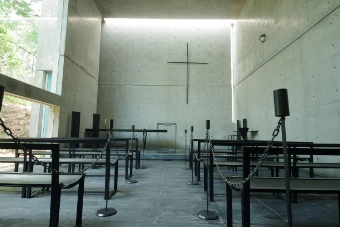
Rokkosan Silence Resort
free admission
Art Work
- J1
SASAKI Rio
Roads and People
- J2
Michele De Lucchi
MONOFIORE 2024 MONOFIORE 2025
- J3
Graduates of Kyoto University of the Arts
Rokkosan Silence Resort Collection
- J4
ITO Yukihisa
Invaders
How to Get Around

Bus
The Rokko Sanjyo Bus operates to connect the various facilities on the mountain.
* IC cards cannot be used for payment.
Cash and credit cards with contactless (tap) payment functions, such as VISA and JCB, are accepted.
Click here for bus schedules
Schedules change depending on the time of year. Please confirm the details before your visit.

Car
Parking areas provided at each location on the mountain.
Some venues cannot be accessed by car, and some venues have different parking hours than others. See here for details.
A convenient common parking ticket (¥1,000), which allows use of the paid parking lots at participating venues with a single ticket, is also available for purchase.

Walk
You can also walk between some of the venues. We recommend wearing comfortable walking shoes.
* Please be careful on paths with narrow pedestrian spaces.
Theme
Chapel of the Wind Area“Human, Beast, or Creature”
Mt. Rokko in Kobe has long served as a crossroads of diverse cultures. Through contrasts between humans and other animals in this space of coexistence, visitors are invited to contemplate the question: What does it mean to be human?
Area Curator: TAKAMIZAWA Kiyotaka/Representative of Takamizawa Art Projects
Graduated from Osaka University of Arts
Independent Curator
He specializes in contemporary art, traditional Japanese tableware, self-playing musical instruments, and museum management. He has served as a museum curator and as Director of the former Rokko International Musical Box Museum (now the Rokko Musical Box Museum & Gardens MORINONE). Since 2010, he has been the curator of the Rokko Meets Art Walk. From 2017 to 2025, he served as General Director of the festival, which was renamed Kobe Rokko Meets Art in 2023. In addition to these roles, he has produced and directed a wide range of art-related projects and exhibitions.
Museum Area(Rokko Musical Box Museum & Gardens MORINONE, Shinike Pond,Rokko Alpine Botanical Garden)Embodying Mt. Rokko
The overarching theme of the Museum Area, Embodying Mt. Rokko, was inspired by the word “Rokko” (六甲) found on the cover of a book that I happened to pick up in Korea. In this context, “Rokko” refers to mudang culture, the tradition of Korean shamanism. Rather than a system of thought that seeks to explain the world through reason, mudang culture offers a way of living alongside events, uncertainties, and fluctuations that cannot be fully expressed in words. It also embodies the role of a mediator—one who moves between humans and nature, the visible and the invisible, crossing these boundaries through physical and embodied acts. The concept of “six” (六) employed here refers to the six directions—east, west, south, north, heaven, and earth—which together represent the totality of the world. This perspective shifts attention away from a human-centered view and encourages visitors to first place themselves within this environment and become receptive to the subtle presences, atmospheres, and transformations that surround them before attempting to understand a work. Bringing together artists of diverse nationalities and cultural backgrounds, the Museum Area aims to create a place where tourism and culture intersect through works that embody lived experience itself—experiences that emerge through the mountain’s stillness, sounds, and the passage of time.
Area Curator: HORIE Noriko/Representative of OFFICE HORIE LLC.
Rokko Garden Terrace Area,
Hyogo Prefectural Mt. Rokko Visitor Center (Memorial Monument),
Banno Sanso, Tenran ObservatoryKankō—See the Lights
The Japanese word kankō (tourism) is said to have originally carried meanings such as “observing a nation’s culture and governance” and “presenting its landscapes, culture, and heritage to people from outside.”
Mt. Rokko and this art festival have likewise built their histories through tourism.
The sights experienced here encompass far more than the visual. They include histories, memories, and stories embedded within the spaces, as well as the people who have visited, observed, and experienced them, and those who have contributed to shaping them over time.
This area is characterized as an alternative space that welcomes people with a wide range of purposes and backgrounds, not only those interested in art appreciation or tourism. Another distinctive feature is that the area comprises multiple venues dispersed throughout the site.
By journeying between these venues and engaging with artistic expressions, visitors are encouraged to deepen their understanding of the site and to share the impressions and insights gained there with others.
We hope this area will become a place of exchange and resonance, where diverse forms of light overlap and intertwine.
Area Curator: OGUNI Yosuke/President of NPO Geiho
Born in Hyogo Prefecture in 1984, where he currently resides. He supports the creative practices of artists, primarily in the Kansai region.
His work focuses on planning and management of art festivals, art projects, and alternative spaces that utilize a wide variety of sites beyond the conventional white-cube gallery setting. These include vacant houses and lots, industrial heritage sites, and spaces that are temporarily out of use.
Through these initiatives, he seeks to expand the possibilities of artistic expression while reexamining and reimagining the functions of places and their relationships with people.
As a director and curator, his recent projects include the Shitamachi Art Festival (2015–present), the Route d’Argent Art Festival in Ikuno (2020–present), and the Gakuenmae Art Festa (2020–2022).
Rokko Cable Area/
Rokko-Shidare ObservatoryA Journey of Transition—From City to Mountain
Mt. Rokko is located remarkably close to the city, where expansive views can be reached in just tens of minutes from the urban environment. As one travels from the city into the mountains, the quality of light, the movement of the wind, surrounding sounds, temperature, bodily sensations, and even one’s state of mind gradually begin to change. Mt. Rokko offers an exceptional setting in which to experience these subtle transitions in all their richness. Under this theme, the exhibition sites are conceived as devices for experiencing, with the whole body, the process of transformation from the urban to the natural environment.
Area Curator: WASHIO Elena/KOBE Mt. Rokko ART & TOURISM Co., Ltd.
Born in 1997, resides in Kobe. After graduating from the Faculty of Art and Culture at Onomichi City University, she joined KOBE Mt. Rokko ART & TOURISM Co., Ltd. in 2019.
Since joining the company, she has worked as a curatorial staff member for Rokko Meets Art Walk. She has served as a curator of the festival since 2024.